Sunflower oil is better than its reputation
For a long time, it was believed that omega-6 should be viewed with skepticism. As a result, sunflower oil—which is high in omega-6—was often viewed with caution. Today, a more nuanced picture is emerging. In many studies, plant-based omega-6 fatty acids, such as linoleic acid, appear to have a neutral effect and, in some cases, even a beneficial one. The body functions in more complex ways than simple rules would suggest. Omega-6 fatty acids play a role in cell membranes, the skin, the immune system, and many metabolic processes. While a small portion of linoleic acid is converted into arachidonic acid—which can be involved in inflammatory processes—linoleic acid also gives rise to substances that can have a regulatory effect. Scientists therefore recommend balance rather than avoidance.
It’s all about the synergy
The key is not to avoid a single type of oil or to use only one. What matters is the synergy. Omega-3 fatty acids are also valuable for the body, especially for the heart, blood vessels, and inflammation-related processes. A ratio of about 5:1 between omega-6 and omega-3 is often recommended. Flaxseed oil is a good plant-based source of omega-3 fatty acids. Even a small spoonful a day can be a useful addition to your diet. It’s best served cold, drizzled over vegetables, potatoes, or salad. Olive oil, canola oil, walnut oil, and high-quality nut oils also have their place, and sunflower oil doesn’t have to disappear from the kitchen as long as it’s of good quality and isn’t used on its own. Rotate your oils. This way, your body gets a variety of fatty acids and plant compounds. Variety nourishes.
Quality makes the difference
Pay attention to quality. Cold-pressed, unrefined oils retain more of what makes plants valuable. Highly refined oils, hydrogenated fats, and industrial baking fats should be viewed more critically. They’re often found in processed foods, baked goods, or cheap margarine. Keep things simple in the kitchen. Flaxseed oil is best used in cold dishes. Olive oil pairs well with salads, vegetables, and gentle cooking methods. Canola oil is well-suited for hot dishes. Walnut oil goes well with leafy salads, root vegetables, or a delicious evening meal. Sunflower oil can be used occasionally, provided it’s high-quality and complements the dish.
This is our philosophy at the Golden Berg
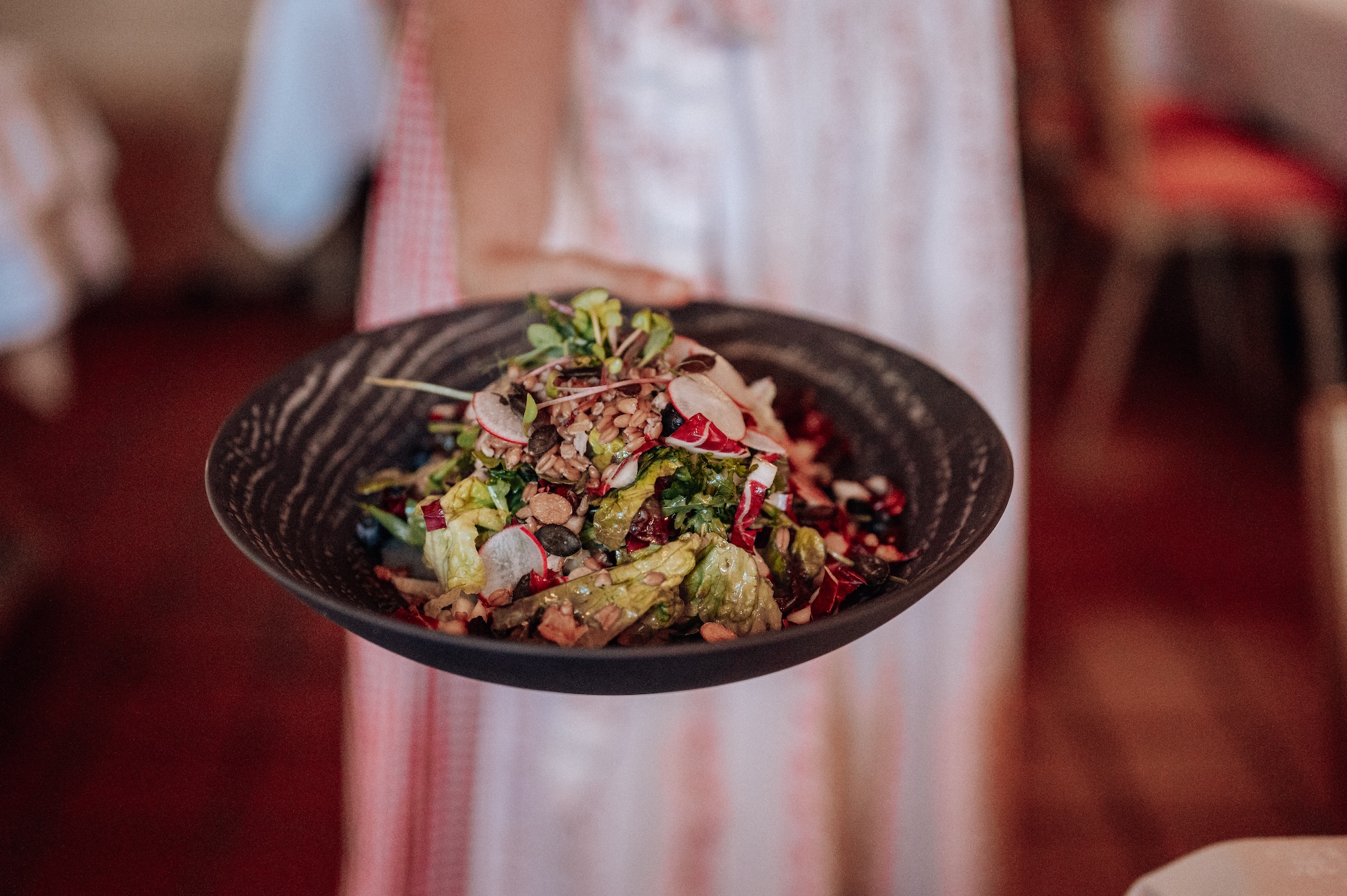
This balance also forms the foundation of our plant-based Alpine cuisine. Executive Chef Theodoros Alexis and his team place great emphasis in the kitchen on regional, seasonal ingredients and on oils that complement each dish—not on a single “superfood.” Whenever possible, we use high-quality organic oils. They’re available first thing in the morning alongside the vegetable juices and at the breakfast buffet. They complement our salads and vegan dishes, and in the evening, guests can choose their favorite from the salad bar according to their taste. For us, this isn’t a trend, but a conviction we live by: Good ingredients, carefully combined, nourish both body and mind alike. In summary, this means: Good oils are not medicine. But they are daily companions. A spoonful here, a little shine there, a delicate flavor on the plate. Those who consciously choose plant-based oils, vary their selection, and pay attention to quality are doing themselves a favor. Not through deprivation. But through balance.



.svg)

.svg)