.svg)


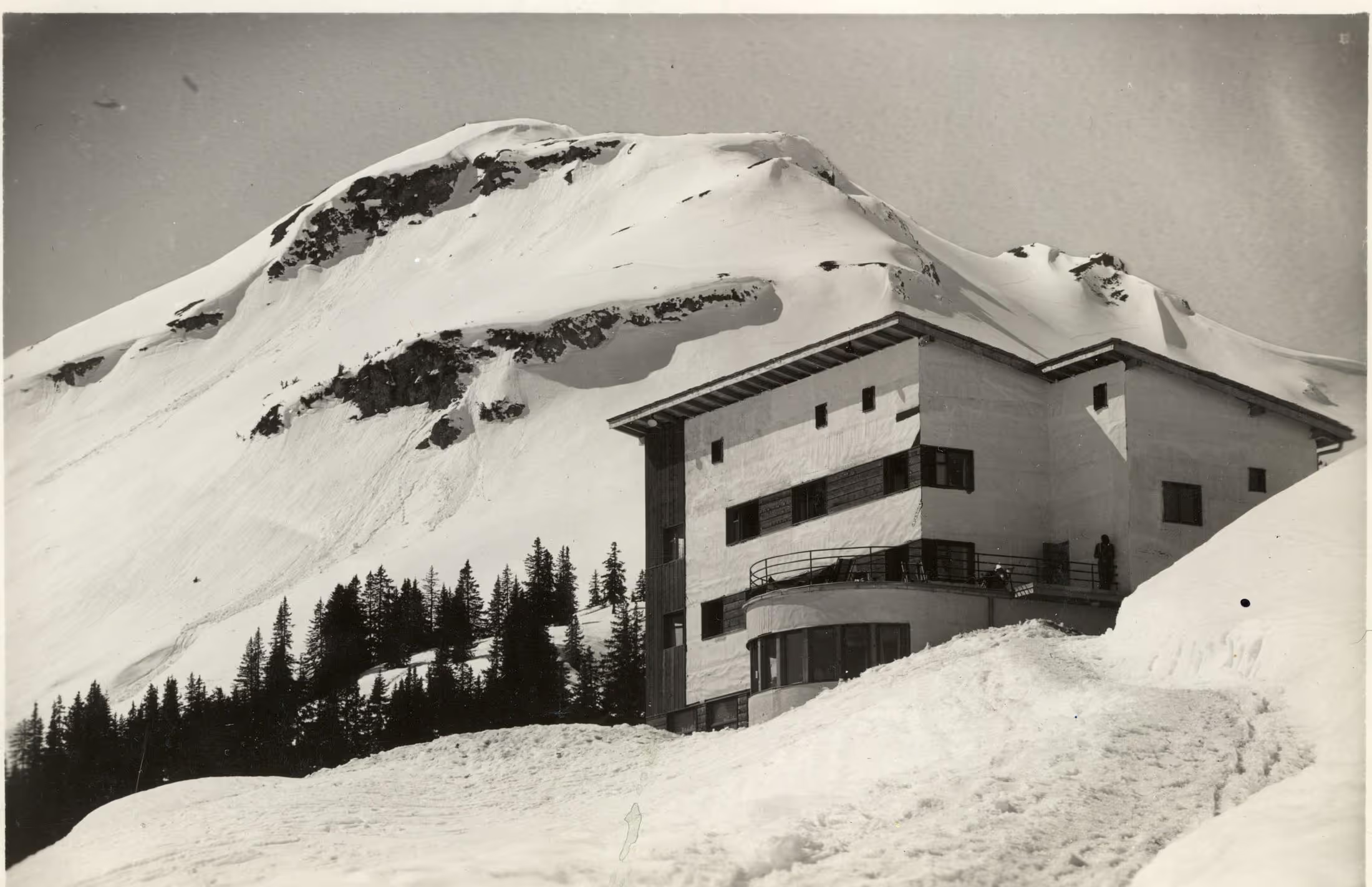
For decades, we have welcomed people from all over the world to Hotel Goldener Berg — each arriving with a unique story to tell.
Here we tell you ours:

includes half-board, 2 yoga sessions daily, and a €50 wellness voucher
A break for body, mind, and soul – surrounded by untouched nature, high above the rooftops of Lech.
Twice-daily yoga or meditation sessions with experienced yoginis
Meditations and ceremonies to bring body and mind into harmony
Our unique Alpine bathing – nature, mindfulness, and mountain air

For decades, we have welcomed people from all over the world to Hotel Goldener Berg — each arriving with a unique story to tell.
Here we tell you ours:

In the place where the Old Golden Mountain now stands, the house was first mentioned in documents in the 15th century. At this time, it is still a rustic cowshed. The low living room, the old cellar and the thick wooden beams still tell of the time when warmth was a precious asset and fire was the center of the house.

Over the centuries, the cowshed has developed into a mountain farm. From generation to generation, the house grows around new chambers, a stable and a hay barn. The rooms follow the lives of mountain farmers, who live on a few cows, meadows and timber rights.

With the start of ski tourism, a new era is moving in the mountains. Leopold Schneider sells the “Obere Bergalpe” to the “Hohe Welt” association. For the first time, the old farm has become a shelter for skiers. Young people travel from the cities to Oberlech and the Arlberg is becoming a meeting place.

The Hammerbacher family took over the house and gave it the name it still bears today: Goldener Berg. “Golden” inspired by the splendor of the high plateau in warm autumn light.. “Mountain” because the farm is located on the mountain plot. At this time, the Goldener Berg consisted of an open smoking kitchen, a living room, ten bedrooms, a haybarn and a stable, two hectares of turnaround and three springs.
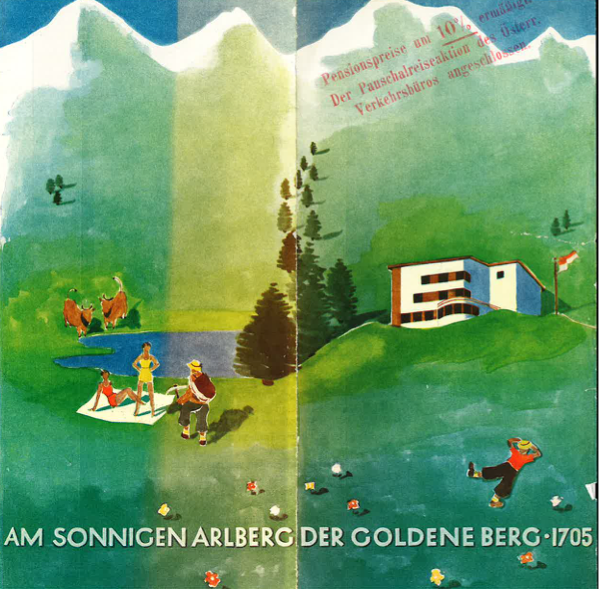
At the beginning of the 20th century, the Hammerbacher family traveled all over Europe to make the town known as a winter holiday destination. Even ski clubs from Great Britain and the Netherlands find their way to the slopes on the Arlberg.
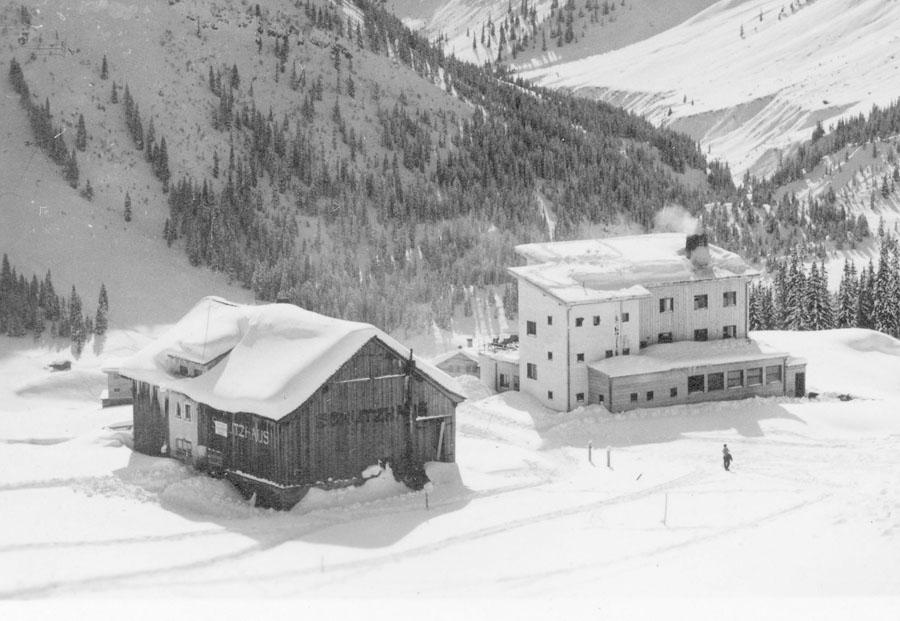
In addition to the simple shelter, one of the most modern hotels of its time is being built: with electric light, running water and central heating. The Hotel Goldener Berg will be a meeting place for athletes, artists and visionaries from all over the world. During the day, they move on the slopes and come together in the former vegetable cellar in the first cellar bar, the so-called “ski hell”.
.jpg)
During the Second World War, Mr. Hammerbacher was Gauleiter. The house is used as a place of rest for Wehrmacht officers. After the end of the war, he is no longer allowed to be in Austria — the house receives no credit and is sequestered as imperial German property.

The removal of the sequester allows Hammerbachers to borrow again. The Golden Mountain is preserved and kept in survival mode for several years. Companies all around are striving forward and developing more quickly. The Golden Mountain is falling back.
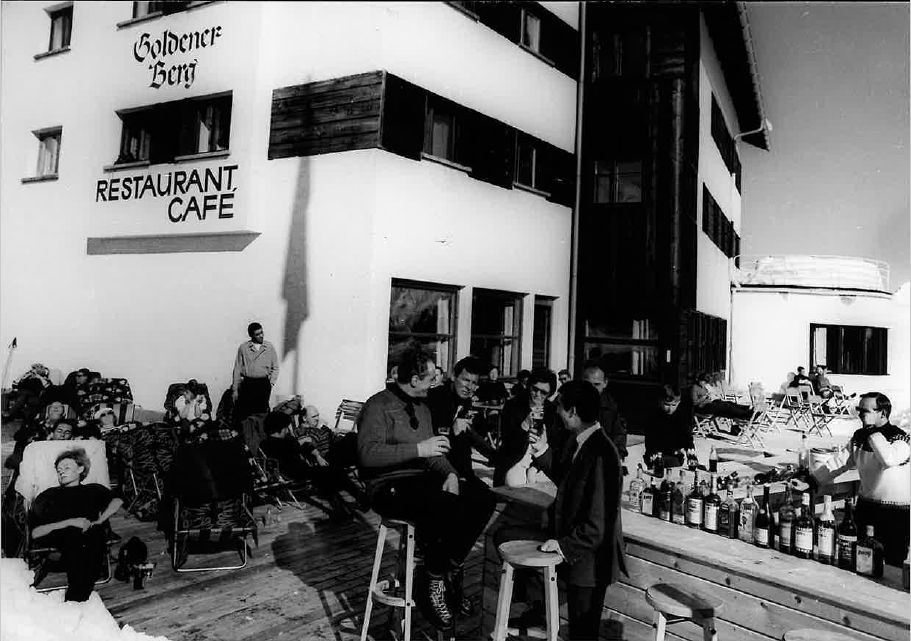
Günter Pfefferkorn (Johann's eldest son) and his friend Günter Rochelt (then head chef) run the Goldener Berg. After completing the hotel management school, Günter's brother, Franz Pfefferkorn, takes over the management of the business at the young age of 20.
Günter Pfefferkorn, Johann's eldest son, and his friend, Günter Rochelt, then head chef, run the Goldener Berg. After completing the hotel management school, Günter's brother, Franz Pfefferkorn, takes over the management of the business at the young age of 20.

Gucky Pfefferkorn comes to Goldener Berg with their daughter Claudia. Together with Franz, Gucky fills the Goldener Berg with life, warmth and style. For 30 years, they have managed the fate of the house — and major renovations.

The Pfefferkorns are involved in the founding of the HOGAST purchasing cooperative for the hotel and hospitality industry in Austria. Today, the HOGAST Group unites over 10,000 member companies in Austria and Germany.
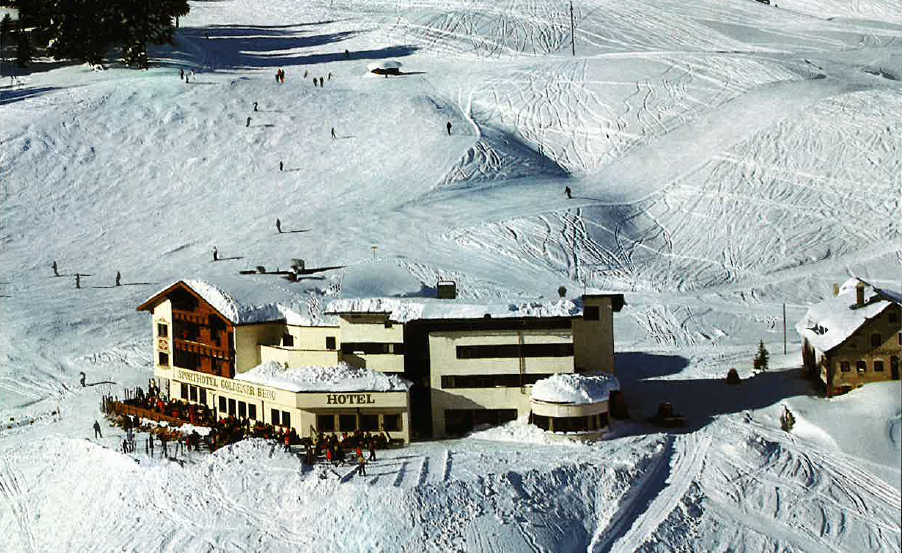
Franz Pfefferkorn adds an extension to the hotel built in 1930. The result is 23 new rooms, a new reception, new guest rooms and a first wellness area with a sauna, massage room and whirlpool. This brings about a financial upturn for the young family.
.jpg)
The story of the first Austrian Club de la Sommellerie begins with Franz Pfefferkorn — and that of one of the largest wine cellars in the country. Today, the selection comprises around 1,800 different wines, which are growing year on year with more wines from near and far.
.jpg)
The passionate hosts Gucky and Franz are gradually handing over the management of the house to their daughter Daniela. Between kitchen, reception and guest rooms, she grew up on the Golden Mountain and felt connected to the mountain from an early age.
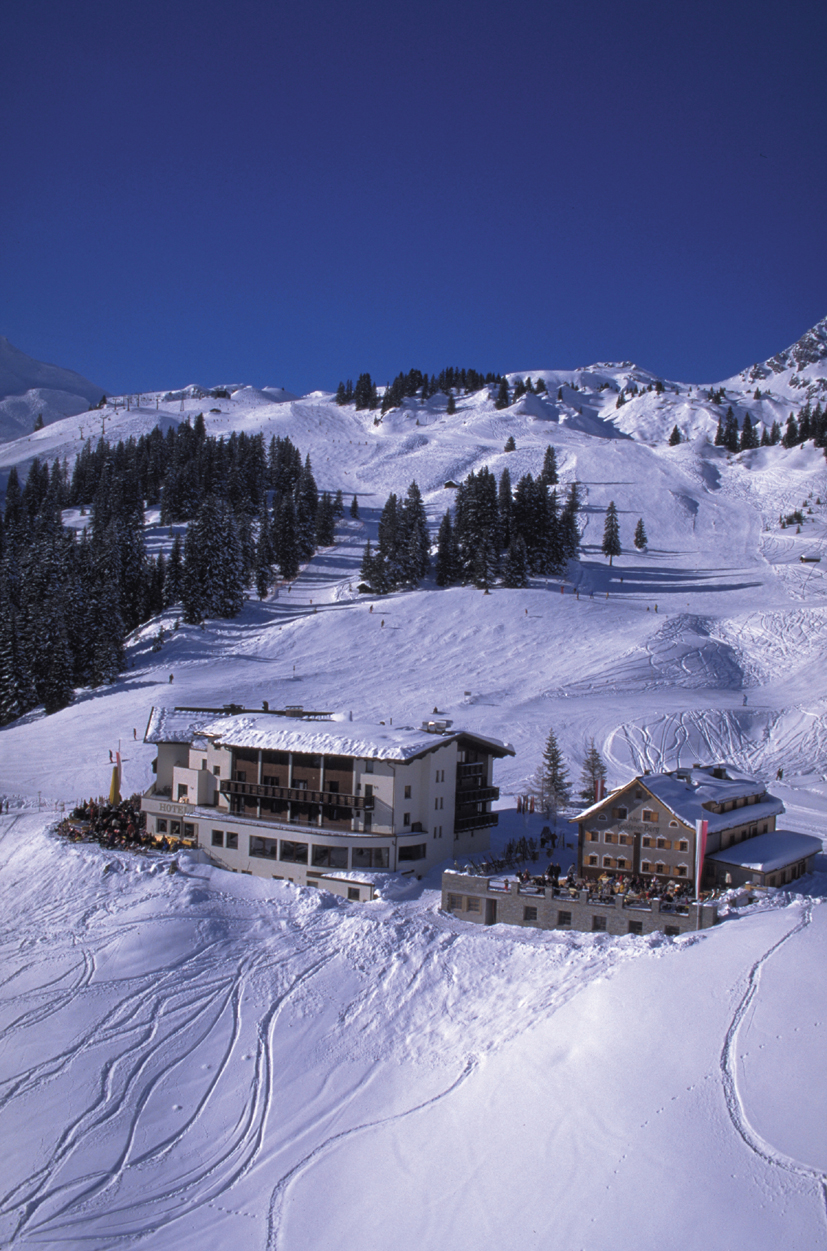
Built in 1930, the hotel was completely renovated at the beginning of the 90s. And the Old Golden Mountain, the former cowshed and now one of the oldest buildings in Lech, is also extensively restored.
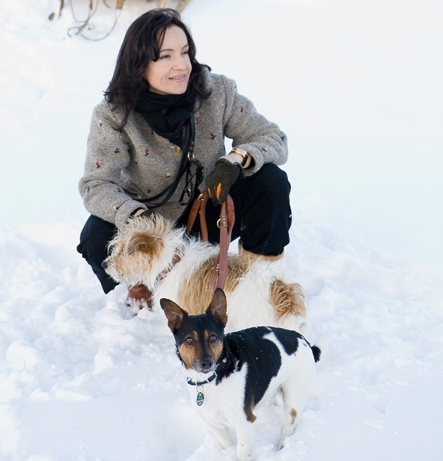
Daniela Pfefferkorn took over the management in 2000 and became the sole owner of the house in 2016. She is continuously developing the Goldener Berg into what it is today: a place where people can fully find themselves and their inner strength.
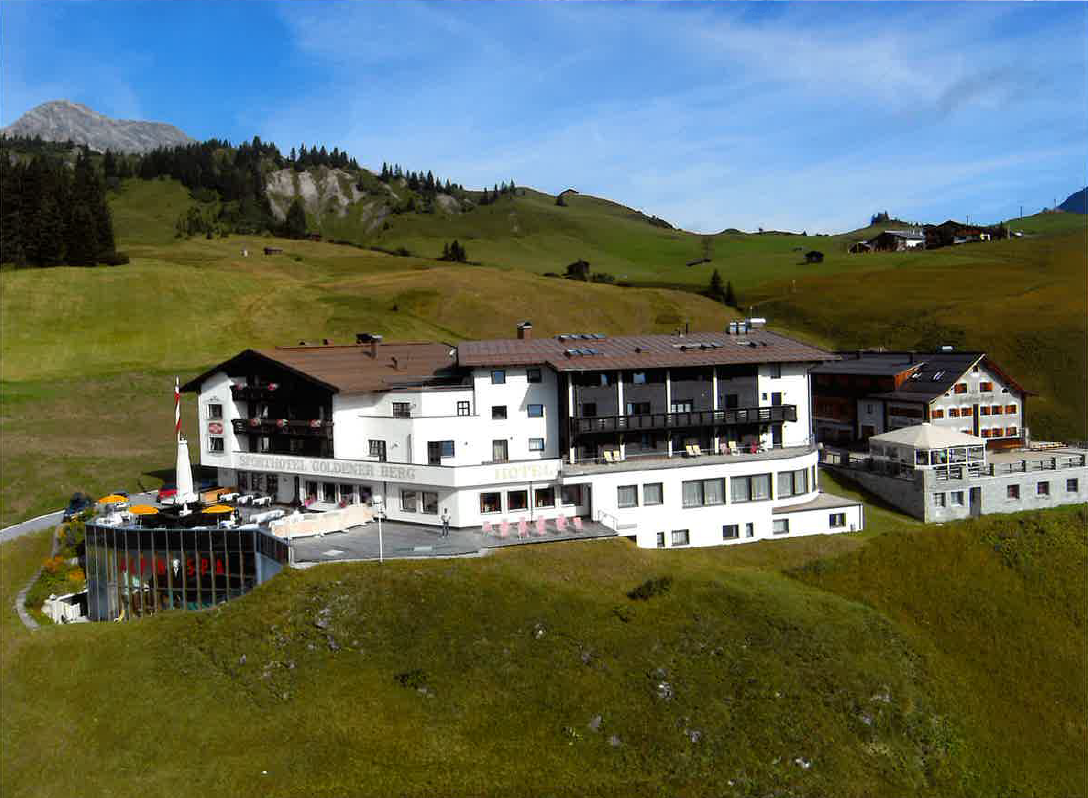
From 2001 onwards, many areas were gradually redesigned over the years — from the creation of the Alpin Spa and the chalets to the renovation of individual rooms and the development of the gardens with a natural swimming pond.
.jpg)
With the construction of the team hotel, a new space is created for the people who accompany guests throughout their stay. The completion of the roof structure is marked with a traditional topping-out ceremony.

We continue to evolve and give what Goldener Berg represents a new name: Holistic Mountain Selfcare Resort. Guests experience that their stay resonates on multiple levels — supporting body, mind and soul.

StefanHeimpel.jpg)
Year by year, Goldener Berg continues to evolve. The Alpine Spa expands with new interior spaces and an outdoor pool. The restaurants are refreshed, the technical systems are upgraded and the rooms are carefully redesigned. We celebrate the opening of the Golden Plateau with a fire ceremony.
.jpg)

Life unfolds when we are fully with ourselves. And that this inner strength can be nurtured at Goldener Berg is something our guests have felt for many years. For 25 years, Daniela Pfefferkorn has been shaping the health concept at Goldener Berg. In 2019 and 2020, the concept was further developed in depth through an extensive rebranding process. In 2026, this philosophy becomes accessible beyond the place itself through a new digital presence.
.svg)

A small kitchen is created in the buffet area. In the morning, the chef prepares fresh egg dishes in front of the guests, and in the evening, cold starters are arranged here. The hotel’s sun terrace is redesigned. On the terrace of Alter Goldener Berg, a cosy lounge with a fire bowl is created. At Alter Goldener Berg, the building’s technical systems are brought up to the hotel’s standard. In addition, six staff accommodations are fully renovated.